Harnessing India's Ocean Wealth for a Sustainable Future
✦ National Policy & Framework
About India's Blue Economy
Sustainable, science-led development of India's ocean, coastal and marine resources for economic growth, livelihoods and ecological security.
Executive Overview
India's Blue Economy Strategic Horizon
Introduction
The Blue Economy refers to the sustainable use of ocean and coastal resources for
economic growth, improved livelihoods, and employment, while preserving the health of
marine ecosystems. For India — with a coastline of about 11,098 km, an Exclusive
Economic Zone (EEZ) of nearly 2.4 million sq. km, nine coastal States and four Union
Territories — the ocean is a strategic frontier for growth. The Ministry of Earth
Sciences (MoES) is the nodal Ministry steering India's Blue Economy agenda in
coordination with allied Ministries, State Governments and research institutions.
What the Blue Economy Means for India
The Government of India recognises the Blue Economy as one of the ten core
dimensions of the national growth vision, "New India by 2030", as
articulated by the Government. It spans fisheries and aquaculture, shipping and ports,
offshore energy, marine biotechnology, coastal and marine tourism, deep-sea mineral
exploration, and ocean-based manufacturing and trade. The concept aligns closely with
United Nations Sustainable Development Goal 14 (SDG 14) — Life Below Water
— which calls on nations to conserve and sustainably use the oceans, seas and marine
resources.
Draft Blue Economy Policy — Seven Thematic Areas
In February 2021, MoES released "India's Blue Economy: A Draft Policy Framework" for
public consultation, inviting inputs from industry, academia, NGOs and citizens. The
draft document organises the Blue Economy around seven thematic areas: (1) National
accounting framework for the Blue Economy and ocean governance; (2) Coastal marine
spatial planning and tourism; (3) Marine fisheries, aquaculture and fish processing; (4)
Manufacturing, emerging industries, trade, technology, services and skill development;
(5) Logistics, infrastructure and shipping, including trans-shipment; (6) Coastal and
deep-sea mining and offshore energy; and (7) Security, strategic dimensions and
international engagement.
Why It Matters
The Blue Economy is intended to enhance the ocean sector's contribution to India's GDP,
generate livelihoods for coastal and fishing communities, attract sustainable investment
in port-led development and offshore industries, and safeguard marine biodiversity and
national maritime security — while supporting India's climate and ocean-science
commitments under the UN Decade of Ocean Science for Sustainable Development
(2021–2030).
India's Ocean Profile at a Glance
~11,098 kmCoastline length
2.4 million sq. kmExclusive Economic Zone (EEZ)
9 States + 4 UTsCoastal States & Union Territories
10 Core DimensionsBlue Economy in Vision of New India @2030
6Thematic pillars of the Draft Blue Economy Policy
2021–2030UN Decade of Ocean Science for Sustainable Development
Source: Ministry of Earth Sciences (MoES) / PIB Government of India
releases. Figures are the latest officially reported values at the time of publication
and are subject to periodic revision.
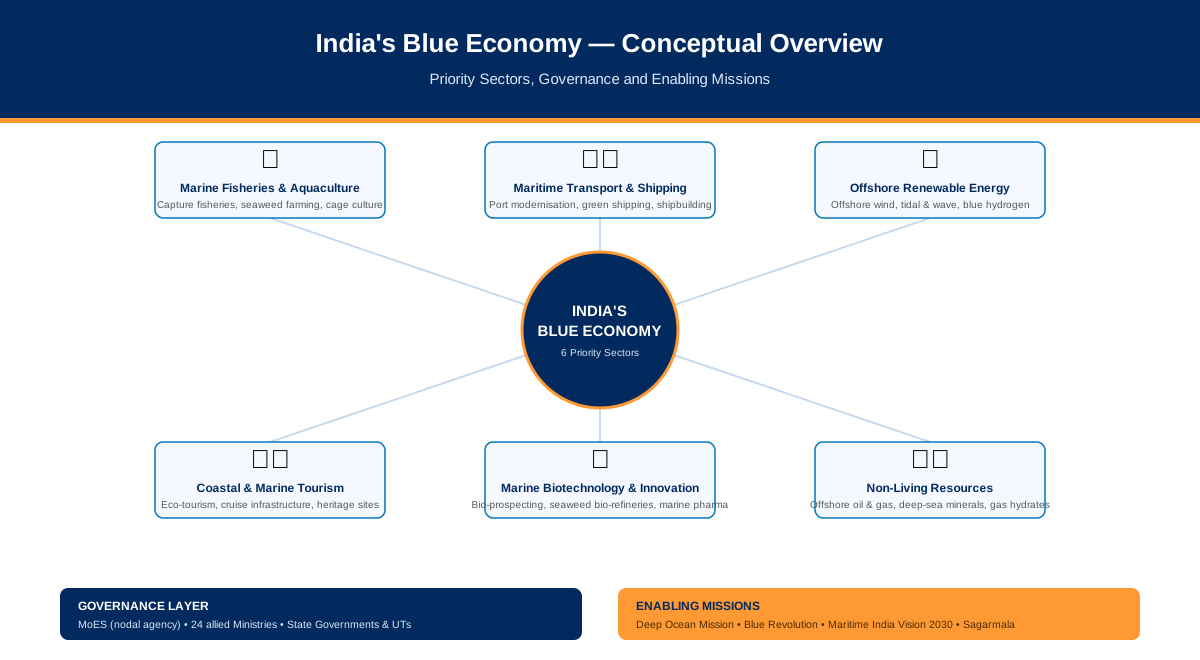
Conceptual overview of India's Blue Economy — sectors,
governance and enabling missions.
Infographic prepared for this prototype from the Draft Blue Economy
Policy Framework (MoES, 2021) and related scheme documents. Official MoES/PIB-branded
graphic to be substituted when published.
Explore the Blue Economy Framework
Tap or click a card to expand
details.
🌊
Vision & Mission
The guiding vision and
mission statements for India's Blue Economy.
Read the full Vision & Mission of the Blue Economy programme, anchored in
sustainable ocean governance and the SAGAR doctrine.
Documents are hosted on the MoES / PIB official portals. This
prototype links to the Resources & Downloads section pending final document
repository integration.
Chapter 01
Vision & Mission
Introduction
India's Blue Economy vision draws on the Government's broader maritime strategic
doctrine, SAGAR (Security and Growth for All in the Region), and the recognition of the
ocean economy as one of the ten core dimensions of the "New India by 2030" growth
vision. The Ministry of Earth Sciences, as nodal Ministry, articulates this vision
through the Draft Blue Economy Policy Framework and its constituent missions.
Vision
To harness India's ocean, coastal and marine resources for inclusive, sustainable and
secure economic growth — enhancing the Blue Economy's contribution to national GDP,
generating livelihoods for coastal and fishing communities, and preserving the long-term
health of marine ecosystems — while positioning India as a responsible maritime power in
the Indian Ocean Region.
Mission
Develop a national accounting framework and robust ocean governance structures for
the Blue Economy.
Promote sustainable marine fisheries, aquaculture and fish processing to enhance
food and livelihood security.
Strengthen ports, shipping, logistics and coastal infrastructure for trade
competitiveness.
Advance offshore energy, deep-sea mineral exploration and marine biotechnology
through science and technology missions such as the Deep Ocean Mission.
Safeguard marine biodiversity, coastal ecosystems and national maritime security.
Deepen international engagement and regional cooperation in the Indian Ocean Region,
guided by the SAGAR doctrine.
Mission Pillars
Tap or click a card to expand
details.
🎤
Ocean Governance
National accounting and
governance frameworks for the Blue Economy.
Content to be updated from official sources — detailed governance framework
document pending publication.
🐟
Fisheries & Livelihoods
Sustainable fisheries
and coastal livelihood security.
Aligned with the Pradhan Mantri Matsya Sampada Yojana (PMMSY) and Department
of Fisheries programmes.
⚓️
Ports & Shipping
Maritime infrastructure
and logistics competitiveness.
Coordinated with the Ministry of Ports, Shipping & Waterways under the
Sagarmala Programme.
🔮
Ocean Science & Deep-Sea Missions
Technology development
for deep ocean exploration.
Delivered through the Deep Ocean Mission led by MoES with NIOT as
implementing institute.
Documents are hosted on the MoES / PIB official portals. This
prototype links to the Resources & Downloads section pending final document
repository integration.
Chapter 02
Objectives
Introduction
The Draft Blue Economy Policy Framework sets out objectives to enhance the Blue Economy's
contribution to India's GDP, improve the lives of coastal communities, preserve marine
biodiversity, and safeguard the nation's maritime security — pursued through coordinated
action across seven thematic pillars.
Core Objectives
The Government's stated objectives for the Blue Economy are to: enhance the contribution
of ocean-based economic activities to national GDP; improve the livelihoods of coastal
and fishing communities; preserve marine biodiversity and ecosystem health; and maintain
the security of India's marine areas and resources — while building a coherent national
accounting and governance framework for the sector.
Sector-wise Objectives (Seven Thematic Pillars)
Objectives are pursued through seven thematic pillars identified in the Draft Blue
Economy Policy: national accounting & ocean governance; coastal marine spatial
planning & tourism; marine fisheries, aquaculture & fish processing;
manufacturing, emerging industries, trade, technology, services & skill development;
logistics, infrastructure & shipping (including trans-shipment); coastal &
deep-sea mining and offshore energy; and security, strategic dimensions &
international engagement.
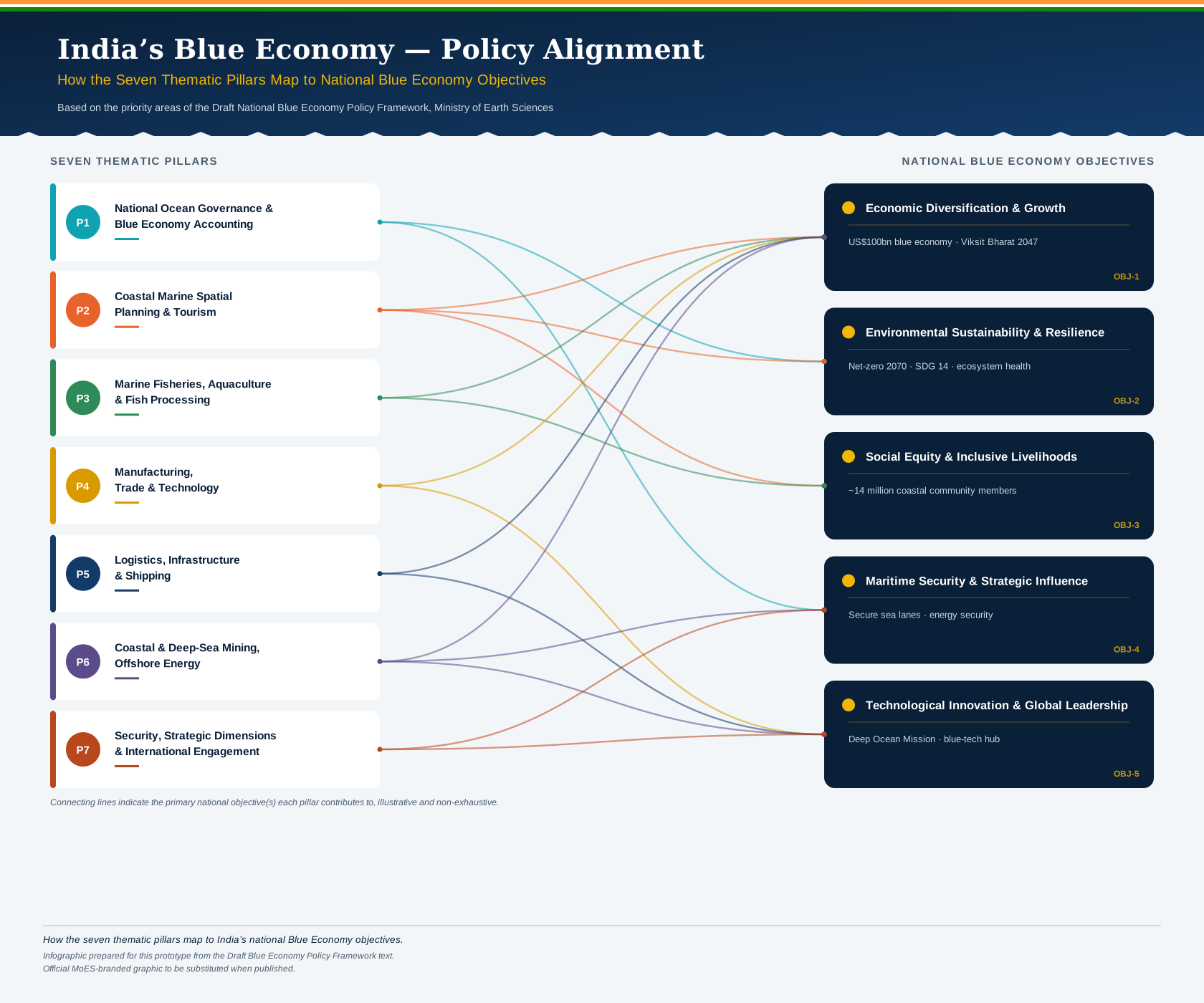
How the Six thematic pillars map to India's national Blue
Economy objectives.
Infographic prepared for this prototype from the Draft Blue Economy
Policy Framework text. Official MoES-branded graphic to be substituted when published.
Thematic Pillars & Objectives
Tap or click a card to expand
details.
📊
1. National Accounting & Ocean Governance
Build a robust framework
to measure and govern the Blue Economy.
Establish standardised national accounting for ocean-based economic activity
and strengthen inter-ministerial ocean governance mechanisms.
🏖️
2. Coastal Marine Spatial Planning & Tourism
Plan coastal space
sustainably; grow responsible marine tourism.
Develop marine spatial planning frameworks and promote sustainable coastal
and marine tourism.
🐟
3. Marine Fisheries, Aquaculture & Fish Processing
Strengthen fisheries
value chains and food security.
Enhance sustainable capture fisheries, aquaculture and fish-processing value
addition, aligned with PMMSY.
🏭
4. Manufacturing, Trade, Technology & Skills
Build emerging
ocean-linked industries and skilled workforce.
Promote manufacturing, emerging industries, trade, technology, services and
skill development linked to the ocean economy.
🚢
5. Logistics, Infrastructure & Shipping
Modernise ports and
shipping for trade competitiveness.
Improve logistics, port infrastructure and shipping, including trans-shipment
capacity, coordinated with Sagarmala.
⛏️
6. Coastal & Deep-Sea Mining, Offshore Energy
Responsibly explore
offshore mineral and energy resources.
Advance deep-sea mineral exploration and offshore energy (including renewable
ocean energy) under missions such as the Deep Ocean Mission.
🛡️
7. Security, Strategic Dimensions & International Engagement
Protect maritime
interests and deepen global partnerships.
Safeguard maritime security and strategic interests while deepening
international ocean cooperation, guided by the SAGAR doctrine.
Documents are hosted on the MoES / PIB official portals. This
prototype links to the Resources & Downloads section pending final document
repository integration.
Chapter 03
Blue Economy Framework
Introduction
India's Blue Economy Framework, set out in the Draft Blue Economy Policy Framework (MoES,
2021), organises the sector into seven interlinked thematic pillars, supported by an
institutional structure spanning central Ministries, State Governments, scientific
institutions and international partners.
Structure of the Framework
The framework is built around: (a) a national accounting and governance
layer that measures and coordinates Blue Economy activity; (b)
sectoral pillars covering fisheries, tourism, manufacturing/trade,
logistics/shipping, and offshore mining/energy; and (c) a security and
international engagement layer that situates India's Blue Economy within
its regional and global maritime strategy.
Enabling Missions and Programmes
The framework is operationalised through flagship missions and programmes, including the
Deep Ocean Mission (deep-sea exploration and technology),
O-SMART (Ocean Services, Modelling, Application, Resources and
Technology — the umbrella scheme for MoES ocean-related schemes), the Sagarmala
Programme (port-led development, Ministry of Ports, Shipping &
Waterways), and the Pradhan Mantri Matsya Sampada Yojana (PMMSY)
(Department of Fisheries).
Scientific & Institutional Backbone
The framework relies on MoES's network of autonomous institutions — INCOIS (ocean
information services), NIOT (ocean technology), NCESS (earth science studies), CMLRE
(marine living resources), IMD (meteorology) and NCPOR (polar and ocean research) —
providing the scientific, technological and data foundation for Blue Economy planning
and decision-making.
Framework Building Blocks
6Thematic pillars
O-SMARTMoES umbrella ocean scheme
6+MoES autonomous institutions involved
Multi-ministerialGovernance structure
Source: Ministry of Earth Sciences (MoES) / PIB Government of India
releases. Figures are the latest officially reported values at the time of publication
and are subject to periodic revision.
Framework Components
Tap or click a card to expand
details.
🏗️
Institutional Layer
Central Ministries,
State Governments and nodal agencies.
Documents are hosted on the MoES / PIB official portals. This
prototype links to the Resources & Downloads section pending final document
repository integration.
Chapter 04
Governance Structure
Introduction
India's Blue Economy governance is coordinated by the Ministry of Earth Sciences (MoES)
as the nodal Ministry, working alongside allied central Ministries, State/UT coastal
governments, statutory and scientific institutions, and international bodies, to ensure
integrated planning across sectors.
Nodal Ministry
The Ministry of Earth Sciences (MoES) is the nodal Ministry for India's
Blue Economy, responsible for coordinating the Draft Blue Economy Policy Framework,
ocean science missions (including the Deep Ocean Mission), and inter-agency data and
governance frameworks through its network of autonomous institutions.
Allied Central Ministries & Departments
Ministry of Ports, Shipping & Waterways — ports, shipping and
Sagarmala port-led development.
Department of Fisheries (Ministry of Fisheries, Animal Husbandry &
Dairying) — marine fisheries and aquaculture, including PMMSY.
Ministry of New & Renewable Energy (MNRE) — offshore wind and
ocean renewable energy.
Ministry of Environment, Forest and Climate Change — coastal
regulation and marine biodiversity conservation.
Ministry of External Affairs — international maritime engagement
under the SAGAR doctrine.
NITI Aayog — policy coordination and strategic planning inputs.
Scientific & Statutory Institutions under MoES
INCOIS — Indian National Centre for Ocean Information Services
(ocean data, forecasting, early warning).
NIOT — National Institute of Ocean Technology (ocean technology
development, including Deep Ocean Mission submersibles).
NCESS — National Centre for Earth Science Studies.
CMLRE — Centre for Marine Living Resources & Ecology.
IMD — India Meteorological Department.
NCPOR — National Centre for Polar and Ocean Research.
State & Union Territory Coordination
Nine coastal States and four Union Territories participate through State nodal
departments and Coastal Zone Management Authorities, ensuring that national Blue Economy
priorities are implemented in coordination with local planning, coastal regulation and
fisheries administration.
Governance Snapshot
1Nodal Ministry (MoES)
6+Allied central Ministries/Departments
6Key MoES autonomous institutions
9 + 4Coastal States & Union Territories
Source: Ministry of Earth Sciences (MoES) / PIB Government of India
releases. Figures are the latest officially reported values at the time of publication
and are subject to periodic revision.
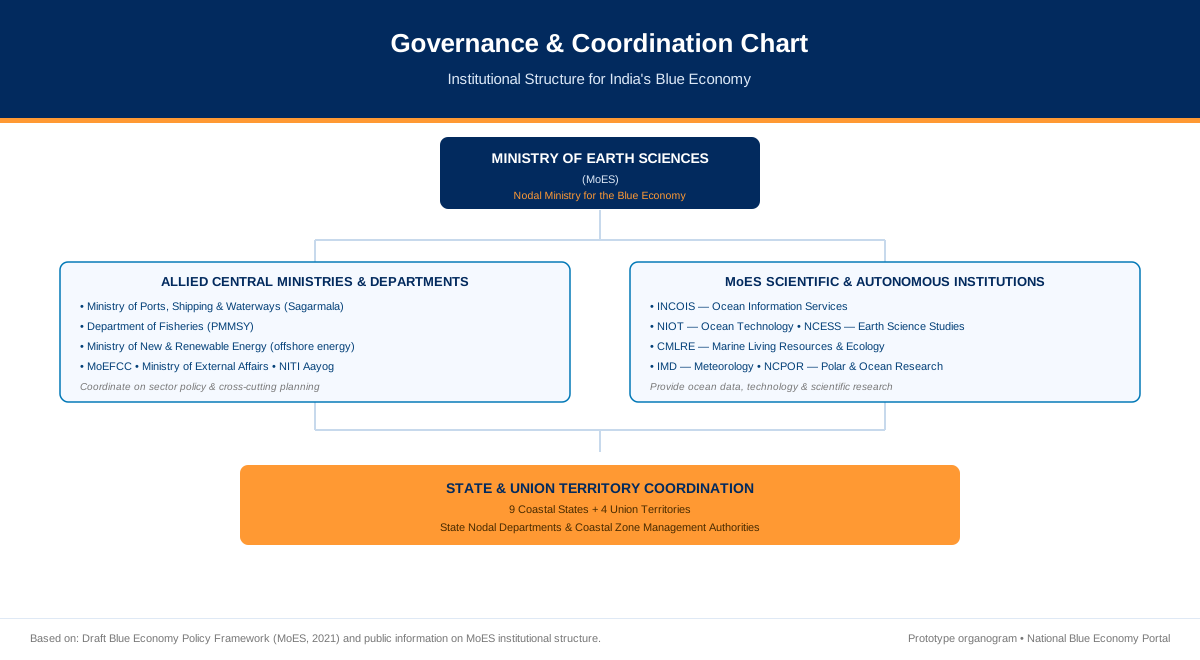
Governance and coordination chart for India's Blue Economy.
Infographic prepared for this prototype from the Draft Blue Economy
Policy Framework and public MoES institutional information. Official MoES-branded
organogram to be substituted when published.
Institutional Directory
Tap or click a card to expand
details.
🏛️
Ministry of Earth Sciences (MoES)
Nodal Ministry for the
Blue Economy.
Coordinates policy, ocean science missions and inter-agency governance.
Documents are hosted on the MoES / PIB official portals. This
prototype links to the Resources & Downloads section pending final document
repository integration.
Chapter 05
National Blue Economy Policy
Introduction
In February 2021, the Ministry of Earth Sciences released "India's Blue Economy: A Draft
Policy Framework" for public consultation. The draft policy outlines the vision and
strategy for the Government of India to responsibly harness the country's ocean
resources, and remains India's foundational Blue Economy policy document, aligned with
related national schemes.
Background & Consultation
MoES disseminated the draft policy for public consultation via its website and social
media handles, and those of its institutes, inviting suggestions from industry, NGOs,
academia and citizens by 27 February 2021. The draft framework was prepared in line with
the Government's "Vision of New India by 2030", which identifies the Blue Economy as one
of ten core dimensions of national growth.
Seven Thematic Pillars of the Draft Policy
National accounting framework for the Blue Economy and ocean governance
Coastal marine spatial planning and tourism
Marine fisheries, aquaculture and fish processing
Manufacturing, emerging industries, trade, technology, services and skill
development
Logistics, infrastructure and shipping, including trans-shipment
Coastal and deep-sea mining and offshore energy
Security, strategic dimensions and international engagement
Policy Objectives
The draft policy aims to enhance the Blue Economy's contribution to India's GDP, improve
the lives of coastal communities, preserve marine biodiversity, and maintain the
security of the nation's marine areas and resources.
Pradhan Mantri Matsya Sampada Yojana (PMMSY) — fisheries sector
development, Department of Fisheries.
O-SMART Scheme — MoES umbrella scheme for ocean services,
modelling, applications, resources and technology.
Deep Ocean Mission (2021) — deep-sea exploration and technology
mission.
National Fisheries Policy — sustainable fisheries management
(content to be updated from official sources for the current consolidated policy
text).
Policy at a Glance
2021Draft policy released for consultation
7Thematic pillars
27 Feb 2021Public consultation deadline (initial round)
MoESLead Ministry
Source: Ministry of Earth Sciences (MoES) / PIB Government of India
releases. Figures are the latest officially reported values at the time of publication
and are subject to periodic revision.
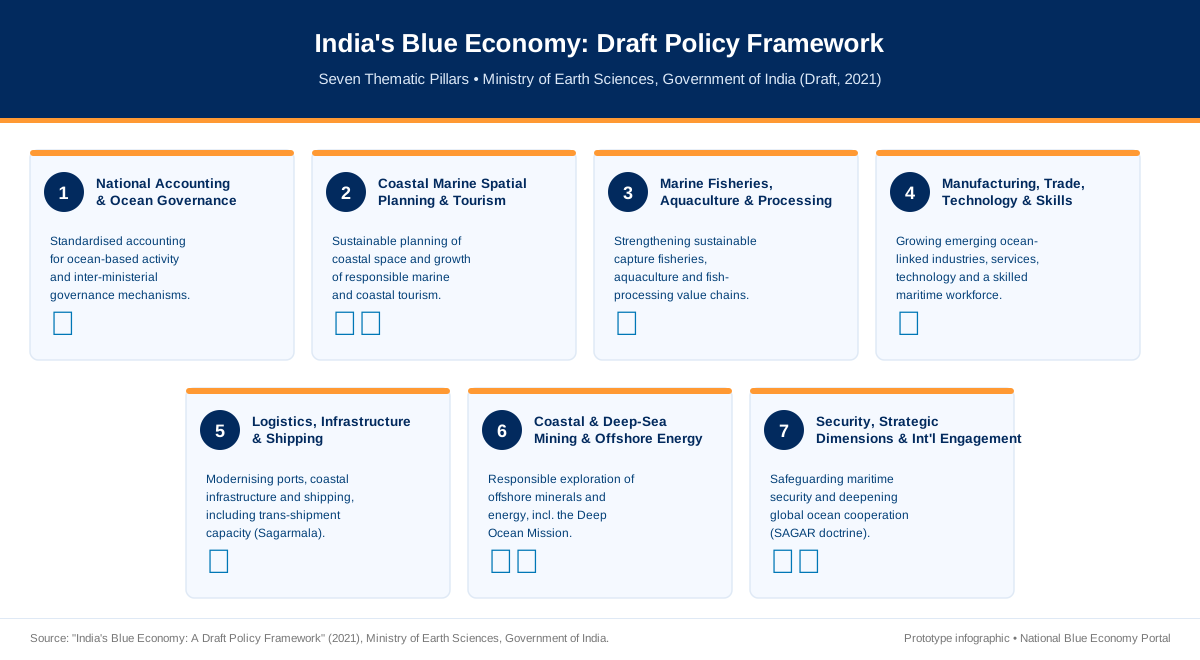
The seven thematic pillars of India's Draft Blue Economy
Policy Framework (MoES, 2021).
Infographic prepared for this prototype from the Draft Blue Economy
Policy Framework text. Official MoES-branded graphic to be substituted when published.
Related Policy Instruments
Tap or click a card to expand
details.
⚓️
Sagarmala Programme
Port-led development and
coastal economic zones.
Ministry of Ports, Shipping & Waterways flagship programme, launched
2015.
🐟
PMMSY
Fisheries sector
transformation scheme.
Department of Fisheries scheme to enhance fish production, productivity and
post-harvest management.
🌊
O-SMART
MoES umbrella ocean
services scheme.
Covers ocean observation, forecasting, technology development and resource
surveys.
🔮
Deep Ocean Mission
Deep-sea exploration and
technology mission.
Launched September 2021; estimated cost ₹4,077 crore over five years
(2021–2026), implemented in phases.
Documents are hosted on the MoES / PIB official portals. This
prototype links to the Resources & Downloads section pending final document
repository integration.
Chapter 06
Roadmap
Introduction
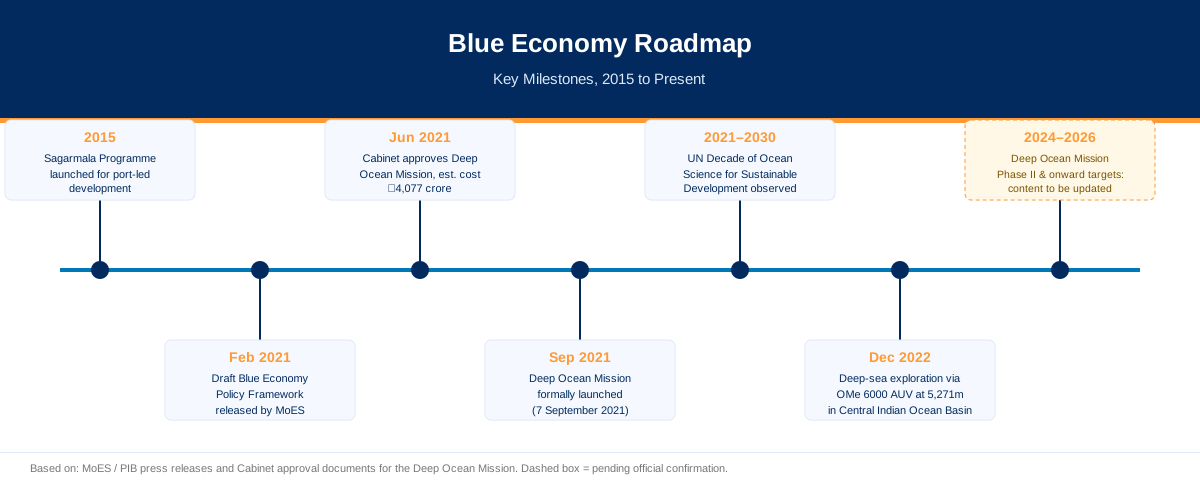
India's Blue Economy roadmap has evolved through a series of missions, programmes and
policy milestones since 2015, anchored by the Draft Blue Economy Policy Framework (2021)
and the Deep Ocean Mission, and aligned with the global UN Decade of Ocean Science for
Sustainable Development (2021–2030).
Phased Implementation — Deep Ocean Mission
The Deep Ocean Mission was approved by the Cabinet Committee on Economic Affairs at an
estimated overall cost of ₹4,077 crore over five years (2021–2026), to
be implemented in a phase-wise manner. Phase I (2021–2024) was allocated approximately
₹2,823.4 crore. The mission is structured around six major themes,
including deep-sea mineral mining technologies, a manned submersible (Matsya 6000) rated
to 6,000 m depth developed with NIOT and ISRO/VSSC, ocean climate change advisory
services, deep ocean biodiversity exploration, and ocean energy & desalination
research.
Milestones
2015
Sagarmala Programme launched for port-led development (Ministry of Ports,
Shipping & Waterways).
Feb 2021
MoES releases the Draft Blue Economy Policy Framework for public consultation.
Jun 2021
Cabinet approves the Deep Ocean Mission at an estimated cost of ₹4,077 crore.
Sep 2021
Deep Ocean Mission formally launched (7 September 2021) as a Central Sector
Scheme of MoES.
2021–2030
UN Decade of Ocean Science for Sustainable Development observed globally.
Dec 2022
Deep-sea mineral exploration conducted using the OMe 6000 AUV at 5,271 m
depth in the Central Indian Ocean Basin.
2024–2026
Deep Ocean Mission Phase II and continued milestones. Content to be updated from official sources.
Ahead
Longer-term Blue Economy targets aligned with Vision of New India @2030. Content to be updated from official sources.
Roadmap Snapshot
₹4,077 croreDeep Ocean Mission — total estimated cost
₹2,823.4 crorePhase I allocation (2021–2024)
2021–2026Deep Ocean Mission duration
6,000 mTarget depth — Matsya manned submersible
Source: Ministry of Earth Sciences (MoES) / PIB Government of India
releases. Figures are the latest officially reported values at the time of publication
and are subject to periodic revision.
Key Blue Economy roadmap milestones, 2015 to present.
Infographic prepared for this prototype from MoES / PIB press
releases and Cabinet approval documents. Official MoES-branded graphic to be substituted
when published.
Roadmap Themes
Tap or click a card to expand
details.
⛖️
Deep-Sea Mineral Exploration
Polymetallic nodule
exploration in the Central Indian Ocean Basin.
India was allocated a seabed exploration site by the International Seabed
Authority in the Central Indian Ocean Basin for polymetallic nodules
containing nickel, copper, cobalt and manganese.
🔬
Manned Submersible (Matsya 6000)
Human Occupied Vehicle
for 6,000 m depth exploration.
Developed jointly by NIOT, MoES and VSSC (ISRO) under the Samudrayaan
project.
🌡️
Ocean Climate Advisory Services
Seasonal-to-decadal
ocean and climate projections.
Suite of observation systems and models to project sea level, cyclone
intensity, storm surges and ecosystem trends along the Indian coast.
🌴
Biodiversity & DNA Banking
Deep-sea fauna inventory
of the Northern Indian Ocean.
Systematic sampling and archival of deep-sea specimens via ROV surveys.
Documents are hosted on the MoES / PIB official portals. This
prototype links to the Resources & Downloads section pending final document
repository integration.
Chapter 07
International Engagements
Introduction
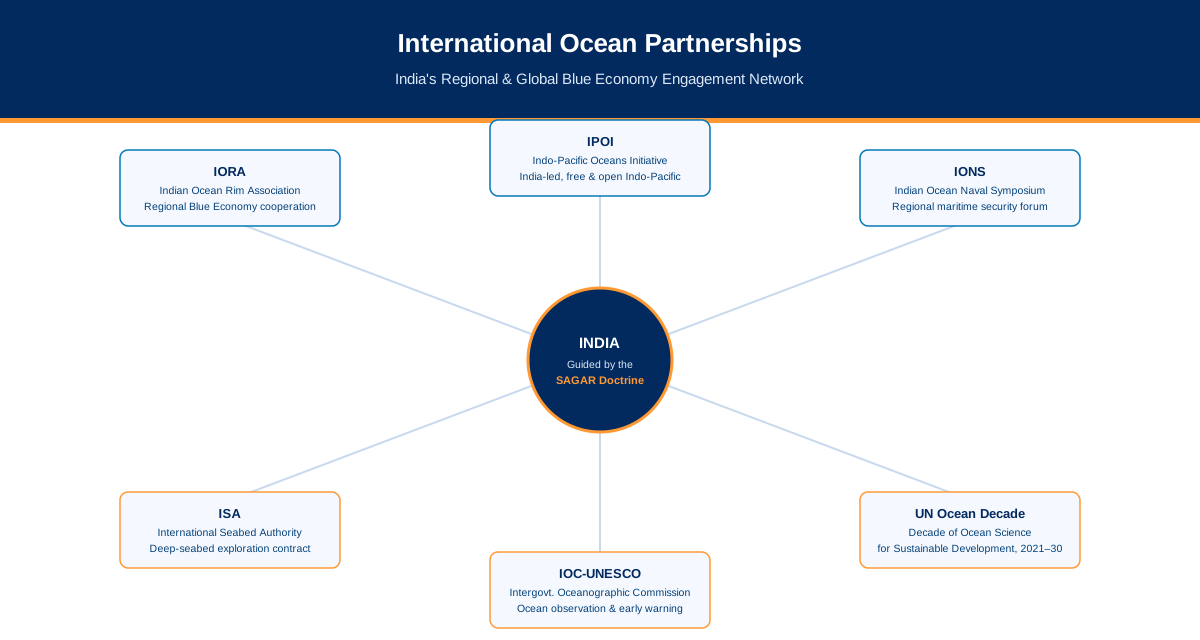
India's Blue Economy is closely linked to its foreign and maritime security policy.
Guided by the SAGAR doctrine (Security and Growth for All in the Region), India engages
regionally and globally through platforms such as the Indian Ocean Rim Association
(IORA) and the Indo-Pacific Oceans Initiative, and participates in global ocean-science
efforts including the UN Decade of Ocean Science for Sustainable Development.
SAGAR Doctrine
SAGAR — Security and Growth for All in the Region — is India's maritime
strategic doctrine, articulating a vision of a peaceful, stable and rules-based Indian
Ocean Region. It underpins India's approach to regional maritime security cooperation,
capacity building, and Blue Economy partnerships with Indian Ocean littoral and island
states.
Regional Platforms
Indian Ocean Rim Association (IORA) — India is a member state of
this regional intergovernmental organisation promoting cooperation on the Blue
Economy, maritime safety and security, fisheries management, and disaster risk
reduction among Indian Ocean rim countries.
Indo-Pacific Oceans Initiative (IPOI) — an India-led initiative for
a free, open and inclusive Indo-Pacific, with pillars including marine ecology,
maritime security, and Blue Economy cooperation.
Indian Ocean Naval Symposium (IONS) — a regional forum for maritime
security cooperation among Indian Ocean littoral navies.
Global Engagement
UN Decade of Ocean Science for Sustainable Development (2021–2030)
— India participates in this global initiative to strengthen ocean science for
sustainable development.
International Seabed Authority (ISA) — India holds an exploration
contract for polymetallic nodules in the Central Indian Ocean Basin.
Intergovernmental Oceanographic Commission (IOC-UNESCO) — India
engages on ocean observation and early-warning systems, including through INCOIS.
Bilateral & Multilateral Blue Economy Cooperation
India has pursued Blue Economy-related dialogues and cooperation frameworks with several
partner countries and groupings. A comprehensive, current
list of bilateral MoUs and joint working groups is to be updated from official MoES
/ Ministry of External Affairs sources.
International Engagement Snapshot
SAGARIndia's maritime strategic doctrine
IORARegional Blue Economy & maritime cooperation platform
IPOIIndia-led Indo-Pacific Oceans Initiative
2021–2030UN Decade of Ocean Science for Sustainable Development
Source: Ministry of Earth Sciences (MoES) / PIB Government of India
releases. Figures are the latest officially reported values at the time of publication
and are subject to periodic revision.
India's regional and global ocean partnerships, guided by the
SAGAR doctrine.
Infographic prepared for this prototype from MEA / PIB statements on
SAGAR, IORA and related partnerships. Official MoES/MEA-branded graphic to be
substituted when published.
International Partnerships
Tap or click a card to expand
details.
🌐
IORA
Indian Ocean Rim
Association — regional Blue Economy cooperation.
Promotes cooperation on maritime safety, fisheries management, disaster risk
reduction, trade and Blue Economy among Indian Ocean rim states.
🛡️
Indo-Pacific Oceans Initiative
India-led pillars for a
free and open Indo-Pacific.
Includes a dedicated Blue Economy pillar promoting sustainable, rules-based
ocean-resource use.
⚓️
IONS
Indian Ocean Naval
Symposium.
Regional naval cooperation forum contributing to maritime domain awareness
and security.
🔬
International Seabed Authority (ISA)
Deep seabed mineral
exploration governance.
India holds an exploration contract for polymetallic nodules in the Central
Indian Ocean Basin, supporting Deep Ocean Mission objectives.
Documents are hosted on the MoES / PIB official portals. This
prototype links to the Resources & Downloads section pending final document
repository integration.
Chapter 08
SDG Alignment
Foundational Alignment
The Blue Economy promotes the sustainable use of oceans and marine resources to drive economic growth, create livelihoods, foster innovation, and strengthen climate resilience while protecting marine ecosystems. By balancing prosperity with environmental stewardship, it directly contributes to achieving SDGs 2, 7, 8, 9, 12, 13, 14 and 17, particularly Life Below Water (SDG 14), sustainable livelihoods, clean energy, responsible production and climate action.
SDG Alignment Snapshot
9 GoalsUN SDGs directly integrated with Blue Economy
SDG 14Core Anchor Goal: Life Below Water
2030Global Sustainable Development Horizon
100%Alignment with SAGAR & National Policy
Source: Ministry of Earth Sciences (MoES) / NITI Aayog SDG India Index & UN Ocean Decade Framework.
Sustainable Development Goals Matrix
Explore how India's Blue Economy initiatives, scientific missions, and policy pillars advance each individual SDG.
14Life Below Water
SDG 14
Life Below Water
Conserve and sustainably use the oceans, seas and marine resources for sustainable development.
Key Focus: Marine spatial planning, preservation of marine biodiversity, coastal ocean monitoring (COMAPS), expanding Marine Protected Areas (MPAs), deep-sea ecological surveys, and combating marine plastic debris through the Swachh Sagar, Surakshit Sagar campaign.
8Decent Work & Economic Growth
SDG 8
Decent Work & Economic Growth
Promote sustained, inclusive and sustainable economic growth, full and productive employment and decent work for all.
Key Focus: Generating sustainable livelihoods for over 4 million traditional fishers and coastal households, expanding port-led industrialization, advancing maritime tourism, blue entrepreneurship, and skill development across coastal clusters.
9Industry, Innovation & Infrastructure
SDG 9
Industry, Innovation & Infrastructure
Build resilient infrastructure, promote inclusive and sustainable industrialization and foster innovation.
Key Focus: Indigenous deep-sea technology development including the manned submersible MATSYA 6000, green shipping corridors, smart port automation, ocean research vessels, and marine biotechnology incubators.
13Climate Action
SDG 13
Climate Action
Take urgent action to combat climate change and its impacts.
Key Focus: Ocean-climate nexus interventions, Blue Carbon sequestration (mangroves, coral reefs, seagrasses), INCOIS multi-hazard disaster early warning systems (Tsunami, Cyclone, Storm Surge alerts), and coastal resilience infrastructure.
12Responsible Consumption & Production
SDG 12
Responsible Consumption & Production
Ensure sustainable consumption and production patterns.
Key Focus: Science-based sustainable fisheries harvesting, eliminating Illegal, Unreported and Unregulated (IUU) fishing, modernizing cold chain logistics to reduce post-harvest losses, and pioneering zero-waste circular marine processing.
7Affordable & Clean Energy
SDG 7
Affordable & Clean Energy
Ensure access to affordable, reliable, sustainable and modern energy for all.
Key Focus: Harnessing India's ~70 GW offshore wind potential along Gujarat and Tamil Nadu coasts, Ocean Thermal Energy Conversion (OTEC) pilot plants by NIOT, wave and tidal energy systems, and green port renewable electrification.
17Partnerships for the Goals
SDG 17
Partnerships for the Goals
Strengthen the means of implementation and revitalize the Global Partnership for Sustainable Development.
Key Focus: Leading regional maritime collaborations under the SAGAR doctrine, the Indo-Pacific Oceans Initiative (IPOI), the Indian Ocean Rim Association (IORA), and active contribution to the UN Decade of Ocean Science (2021–2030).
11Sustainable Cities & Communities
SDG 11
Sustainable Cities & Communities
Make cities and human settlements inclusive, safe, resilient and sustainable.
Key Focus: Enforcing Coastal Regulation Zone (CRZ) governance, Integrated Coastal Zone Management (ICZM), construction of multi-purpose cyclone shelters, shoreline protection engineering, and resilient port-city development.
2Zero Hunger
SDG 2
Zero Hunger
End hunger, achieve food security and improved nutrition and promote sustainable agriculture.
Key Focus: Expanding sustainable marine aquaculture and mariculture under the Pradhan Mantri Matsya Sampada Yojana (PMMSY), commercial seaweed farming for micronutrient security, and sustainable coastal seafood production.
Chapter 09
Stakeholders & Partners
Government Stakeholders &
Institutional Activities
Explore inter-ministerial partnerships and
specialized institutional mandates driving India's ocean and earth sciences initiatives.
Click on a ministry to view its associated institutes and activities.
⚙
NCCR
Marine spatial planning
Development of web based Coastal Change System to disseminate
information on shoreline management
Development of Regional Risk Assessment and Decision Support
tools
Development of scientific and technology based tools to aid
disaster risk reduction
NIOT
Development of indigenous marine technology
Deep sea exploration
Sustainable Aquaculture
Renewable ocean energy
INCOIS
Collection and dissemination of ocean state data
Advisory on fish stock to fishers
Generation of Global Ocean Analysis data to provide the initial
conditions to ocean-atmosphere coupled models
Training and capacity building
CMLRE
Ornamental fish breeding and culture
Product development from non-conventional fishery resources
Identification of new marine living resources
Storage and dissemination of data on marine living resources to
end users
Technological Innovations for Exploration and Conservation of
Deep-Sea Biodiversity
NCPOR
Exploration of multi-metal hydrothermal mineralisation in the
Indian ridge area
Exploration of gas hydrate occurrences within the EEZ